Today is Ash Wednesday, the beginning of the 40 days of Lent leading up to Easter Sunday. Ashes that are from the palms used the previous Palm Sunday are used to mark the observant on this day. My friend Arby up at the Presbyterian Church in Clifton invited me (perhaps a bit tongue in cheek) to come up and receive "the imposition of ashes" today. I don't think I'll make it. But I know that many of us who did not grow up with Lent wonder what it's about, or whether we should be observing it (I don't say "celebrate," because it is a fast, not a feast, and meant to be a time of self-denial). If you grew up, like I did in my elementary years, in a predominately Roman Catholic town, you may have seen people with ashes smudged on their foreheads, and heard people talk about what they were "giving up" for Lent--it could have been a significant fast-type sacrifice (no meat other than fish was not uncommon), or it could have been much less ("no chocolate," "no TV," and "no booze" were three I remember hearing from people).
Why observe Lent? Or why not? While thought of as belonging to the more liturgical traditions, more evangelicals are choosing to use Lent as a part of their church calendar--some use it only "devotionally" (with a focus on the end of Christ's earthly ministry) while others include the self-denial/fasting aspects as a means of focusing one's thoughts and heart on the upcoming remembrance of the sacrifice and resurrection of Christ.
Where did Lent come from? According to Irenaeus and Tertullian (church fathers from the later 2nd century) there was fasting before Easter for periods from one day to forty hours (believed to be the amount to time Christ was in the tomb). This Easter fasting grew to include the whole of the week from Palm Sunday (often called Holy Week) and after the Council of Nicea, a growing trend took hold to extend the fasting out 40 days before Easter (there were variations over time and geography, but often modeled after various 40 day fasts in the Bible, including that of Jesus in the wilderness). It was also common to fast before one's baptism, and Easter was a popular day for being baptized, so that also may have figured in to the observance. By the end of the first millennium after Christ, all Christians observed Lent. Only in the Reformation did the issue begin to be re-examined, as questions of church traditions were examined in light of Scripture.
Luther and Calvin both saw Lent as something that could be used well when it sprang from a heart of gratitude toward God, when it was not practiced superstitiously as a "work" to earn God's favor, and when it was following the Lord's example of fasting for spiritual purposes. Zwingli felt the same, but is noted for supporting those in his congregation who chose not to fast (exercising Christian freedom) in an environment where everyone fasted out of a sense of obligation and under what was then church law.
As Reformers of a more radical bent came along, practices that were not explicitly spelled out in the Bible came to be rejected. For these later Reformers (including English Puritans and early Baptists) all church feasts and fasts were seen as unnecessary and superstitious, and were eliminated (including Christmas and Easter celebrations). Only Sunday as "the Lord's Day" and church ordinances/sacraments were kept. Even the church's liturgical calendar, that had guided regular readings of Scripture in all churches, was widely abandoned.
Over time, however, many Protestants who came from such radical roots began to moderate their objections over these once-rejected "Romanist trappings." The use of Christmas and Easter as both celebrations and witnesses to gospel truth became accepted and now preferred. Advent (the season of preparation for Christmas) has had a resurgence, as has the use of various church calendar holidays (Pentecost Sunday for example). And even Lent has made a comeback among those among whom it was once mocked.
As one who has a great appreciation of church history, I welcome a closer examination of ancient practices that many used for spiritual edification and growth. There were some important reasons why the early church encouraged fasts and feasts, and why they took seriously the need for both self-discipline and corporate expressions of devotion. Our contemporary approaches to spiritual growth could benefit from both as well. However, I also know that there were some incorrect ideas that show themselves early in church history (like all the confusion over who should be baptized and how) that reminds me that old errors are still errors, and many things that are "ancient" in their origins were rejected for a reason.
My conclusion? If something can be Gospel centered, Christ exalting, biblically faithful and informed, and profitably used, then whether ancient or contemporary, it is available to us for personal or corporate edification. But here I would also agree with the earlier Reformers that either banning or legislating such things would be unwise and might strike at the heart of Christian freedom.
So, if you choose to use Lent as a personal time of reminder and reflection in preparation of celebrating Christ's resurrection--may the risen Lord bless you in it. Today is the day to get started! And if your church does this as a corporate experience, may your congregation be strengthened together in your faith and devotion to Jesus. And if, like me, you (and your church) do not observe it, may each day still be a day when the risen Christ's life and power are your focus and your strength.
My blog primarily for the family and friends of Grace Baptist Church in Cedarville, Ohio, but open to all (this is the internet, after all). I follow up on sermons, add notes of interest to the church, and reflect on matters great and small.
Wednesday, February 10, 2016
Saturday, January 23, 2016
Christians and Politics--the 2016 Remix
It's only January, but I'm late to the party commenting on the race to be the next President of the United States. I have waited to see what might develop before commenting publicly, because as pastor and teacher I know that I am held to a higher standard with public statements than the masses filling Facebook, Twitter, and the blogosphere with the latest posts and memes. And frankly, trying to explain to a public that doesn't necessarily want to weigh such decisions carefully and thoughtfully sometimes feels pointless. "What? You don't like MY candidate? How dare you!"
My support and vote are driven by:
Absolutes: I will not support a candidate who takes stands supporting moral evils that not only call for God's judgment, but undermine the fabric of human society. This includes support for abortion and approval of redefining marriage beyond the union of one man and one woman. I want a candidate whose views coincide with God's plans for human flourishing as revealed in Scripture and creation. I wrote a post before the last election about how I prioritize when candidates and parties offer differing views of what is most moral or "pro-life" here. Please read it.
Convictions: "Liberty and justice for all" is not just the closing line of the Pledge of Allegiance, but the goal of our constitutional government. Because I am acting as an American and exercising the rights provided by the Constitution, my candidate should support the original meaning of the Constitution and the duties of the President, including effectively serving as Commander in Chief, favoring the constitutional limitations on federal power, and allowing greater state and local influence on governmental decisions and directions. I will not actively support a candidate whose character is questionable or worse, and whose positions and behaviors fail to reflect integrity and consistency.
Preferences: I believe that people will do best in a society where judges follow the constitution instead of seeking to reinterpret it, where tax policy creates an equal burden for all rather than having some who pay nothing and some who pay half their income (this is a biblical pattern), where immigration is well regulated and monitored and also growing, and where military intervention is rare, principled based on national security, and always well supported to be successful. A proven track record is preferable to inexperience in leadership.
Pragmatism: I want a candidate that has a good chance of both winning and governing in accord with his or her stated positions, and who is an able thinker and articulate advocate for those positions. And in a case where I have only bad choices, I will vote for the "lesser of two evils" rather than abstain and allow the worse evil to come.
That said, it is very easy for me to weigh in now, based on what we know.
Democratic candidates: there are none that pass any of my first three tests. Secretary Clinton is, as
one person has said, "an ethical train wreck," someone with no leadership success, who actively supports morally reprehensible (according to the Bible) policies. What we know of her character should exclude any serious person from voting for her to be president. Senator Sanders may be acceptable as a person, but is a self-described "democratic socialist," which means he does not support a Constitution that upholds and values individual liberties. He believes the government can take care of people if given enough of the people's money. And Governor O'Malley is a non-factor whose policies are also ruled out by my first three tests.
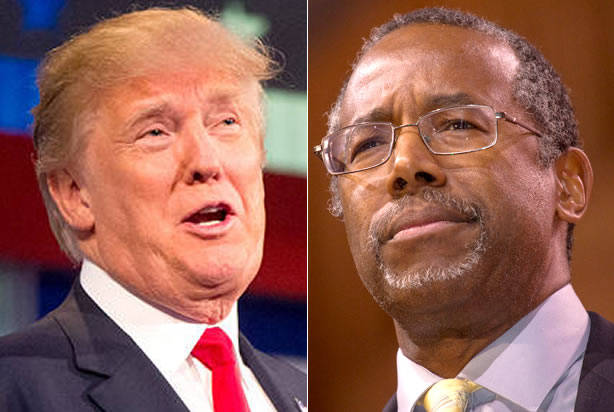
Republican candidates: In a field with a number of qualified and acceptable candidates with these tests, I find that Republicans seem to be moving toward a candidate I do not favor. Donald Trump has recently endorsed all the "right" views in some form for my first test, but until he became a candidate he was articulating the opposite. He reminds me of the long-gone Groucho Marx, who used to joke, "These are my principles. If you don't like them, I have others." His character includes openly bragging about his past immorality, praising an evil enemy (Vladimir Putin), and a pettiness toward insult that leads to responses beneath a leader. He loved the Clintons before he was running against one. He brags of buying influence, but offers no real substantive proposals, other than saying he'll get things done and "win." His opponents are "losers." In my book, America would be losing if he were chosen as his party's candidate.

And the others? Frankly, I could accept any of the other major candidates and some who've already
bowed out. Let's get down to pragmatism. I personally favor many (not all) of the positions of men like Santorum, Huckabee, and Paul, but they have no real chance. Fiorina has much to commend her but has failed to generate enough support to be seriously considered any more. And while I have the highest respect for Dr. Carson, his clear lack of answers dealing with economic and international questions have hurt his candidacy. I think he could come up with good answers, but I'm not sure he would have the time to do so in a national crisis--on the job training for a non-executive or non-military leader has not proven a good course for our nation. And he is not effective in giving clear, concise answers. So I do not support his candidacy, though I would happily vote for him if he was the nominee of his party.

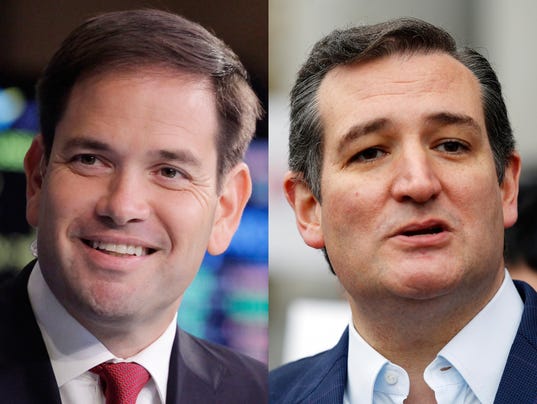
That leaves Cruz, Rubio, Bush, Christie, and Kasich. I could easily support them all. All pass the first three tests. Their differences are much less than their similarities. The three governors have all shown they can get things done, some in more difficult circumstances than others, and each with political compromises that some consider unacceptable, but I view as decisions made based on the realities they faced--they may not have been my decisions, but I understand their reasoning. The two senators
are so similar in substance that it is hard to separate on policy. Cruz has a better tax plan in my view. Rubio is more honest about his support for immigration (Cruz supported in some measure, but now does not). I happen to be closer to Rubio on that point. Both are less experienced in leading something.
Let me give you my assessment, and just take it for what you consider it to be worth:
Let me repeat something I wrote just before the last presidential election about how we as Christians should approach the responsibility and privilege of voting:
My support and vote are driven by:
Absolutes: I will not support a candidate who takes stands supporting moral evils that not only call for God's judgment, but undermine the fabric of human society. This includes support for abortion and approval of redefining marriage beyond the union of one man and one woman. I want a candidate whose views coincide with God's plans for human flourishing as revealed in Scripture and creation. I wrote a post before the last election about how I prioritize when candidates and parties offer differing views of what is most moral or "pro-life" here. Please read it.
Convictions: "Liberty and justice for all" is not just the closing line of the Pledge of Allegiance, but the goal of our constitutional government. Because I am acting as an American and exercising the rights provided by the Constitution, my candidate should support the original meaning of the Constitution and the duties of the President, including effectively serving as Commander in Chief, favoring the constitutional limitations on federal power, and allowing greater state and local influence on governmental decisions and directions. I will not actively support a candidate whose character is questionable or worse, and whose positions and behaviors fail to reflect integrity and consistency.
Preferences: I believe that people will do best in a society where judges follow the constitution instead of seeking to reinterpret it, where tax policy creates an equal burden for all rather than having some who pay nothing and some who pay half their income (this is a biblical pattern), where immigration is well regulated and monitored and also growing, and where military intervention is rare, principled based on national security, and always well supported to be successful. A proven track record is preferable to inexperience in leadership.
Pragmatism: I want a candidate that has a good chance of both winning and governing in accord with his or her stated positions, and who is an able thinker and articulate advocate for those positions. And in a case where I have only bad choices, I will vote for the "lesser of two evils" rather than abstain and allow the worse evil to come.
That said, it is very easy for me to weigh in now, based on what we know.
Democratic candidates: there are none that pass any of my first three tests. Secretary Clinton is, as
one person has said, "an ethical train wreck," someone with no leadership success, who actively supports morally reprehensible (according to the Bible) policies. What we know of her character should exclude any serious person from voting for her to be president. Senator Sanders may be acceptable as a person, but is a self-described "democratic socialist," which means he does not support a Constitution that upholds and values individual liberties. He believes the government can take care of people if given enough of the people's money. And Governor O'Malley is a non-factor whose policies are also ruled out by my first three tests.
Republican candidates: In a field with a number of qualified and acceptable candidates with these tests, I find that Republicans seem to be moving toward a candidate I do not favor. Donald Trump has recently endorsed all the "right" views in some form for my first test, but until he became a candidate he was articulating the opposite. He reminds me of the long-gone Groucho Marx, who used to joke, "These are my principles. If you don't like them, I have others." His character includes openly bragging about his past immorality, praising an evil enemy (Vladimir Putin), and a pettiness toward insult that leads to responses beneath a leader. He loved the Clintons before he was running against one. He brags of buying influence, but offers no real substantive proposals, other than saying he'll get things done and "win." His opponents are "losers." In my book, America would be losing if he were chosen as his party's candidate.
And the others? Frankly, I could accept any of the other major candidates and some who've already
bowed out. Let's get down to pragmatism. I personally favor many (not all) of the positions of men like Santorum, Huckabee, and Paul, but they have no real chance. Fiorina has much to commend her but has failed to generate enough support to be seriously considered any more. And while I have the highest respect for Dr. Carson, his clear lack of answers dealing with economic and international questions have hurt his candidacy. I think he could come up with good answers, but I'm not sure he would have the time to do so in a national crisis--on the job training for a non-executive or non-military leader has not proven a good course for our nation. And he is not effective in giving clear, concise answers. So I do not support his candidacy, though I would happily vote for him if he was the nominee of his party.

That leaves Cruz, Rubio, Bush, Christie, and Kasich. I could easily support them all. All pass the first three tests. Their differences are much less than their similarities. The three governors have all shown they can get things done, some in more difficult circumstances than others, and each with political compromises that some consider unacceptable, but I view as decisions made based on the realities they faced--they may not have been my decisions, but I understand their reasoning. The two senators
are so similar in substance that it is hard to separate on policy. Cruz has a better tax plan in my view. Rubio is more honest about his support for immigration (Cruz supported in some measure, but now does not). I happen to be closer to Rubio on that point. Both are less experienced in leading something.
Let me give you my assessment, and just take it for what you consider it to be worth:
- Bush--a good man, a good governor, but one who does not inspire and who has proven to be a much less effective candidate than I imagined. Sadly, the last name that gave him entry into politics could be enough to keep him from going further.
- Christie--has governed a heavily Democratic state with success. He has not appointed judges that reflect his espoused views, but if they have to be confirmed in New Jersey, he may have selected what he could get through. He is an "in your face" political opponent, but Trump seems to have cornered the market on abrasiveness there.
- Cruz--I can agree with nearly all his positions. He shares my faith and is unashamed of its impact on his positions. He is seen as abrasive and is apparently disliked by almost all elected Republicans in Washington, D.C., which might be a problem but was where Ronald Reagan was in 1980 and especially in 1976. He's been in the Senate four years, and held a state elected office in Texas before that. The "truest" conservatives are most passionate about him.
- Kasich--I have lived under his governorship in Ohio, and I think he has done an excellent job in a tough time. It has helped that he had his party in control of the legislature the whole time. His decision to expand Medicaid in Ohio is abhorred by conservatives, but may have been bowing to reality--and in any case does not diminish his overall effectiveness, in my opinion. A bigger issue is the strange campaign he has run: little of substance and terrible style.
- Rubio--last in the alphabet, but the top of my list. His political positions are nearly identical with my own (I wish he were bolder on taxes). He is the best orator in the field, and the most likable. He has been unashamed to identify his personal faith, even as his Catholic/Evangelical identity confuses both sides. Six years in the Senate were preceded by time in the Florida legislature (including time as Speaker of the House there). He's the candidate that, in my view, should have been the natural and wise choice, but his position on immigration has offended many (it is the same as Reagan's and perhaps even less "open" than the Gipper).
Let me repeat something I wrote just before the last presidential election about how we as Christians should approach the responsibility and privilege of voting:
First, we bow before God's sovereign will, knowing that He will guide events according to his plan for the ages and while we must exercise our responsibilities and will be held accountable for our free actions, He is bringing all of history to its God-glorifying, justice-rendering, mercy- and grace-filled, conclusion. And we are to preach the Gospel of Jesus to the ends of the earth to hasten that day!
Second, we acknowledge that Christ is King over His kingdom, and while it is not here in its fullness, we who are its citizens are to live as such and demonstrate the difference it makes in our choices and in where our confidence lies.
Third, we recognize that in a fallen world, we must often choose the lesser of two evils. No one we could respect would argue that one candidate in our national election for president is God's man, while the other is the forerunner of the Antichrist! They are both flawed men who hold positions and beliefs that do not reflect righteousness fully. But we must still choose and should choose the lesser of the two evils (also known as the better of two alternatives). I read a great post on that subject here. The best reminder there: "Not only are the choices imperfect, but so also is the chooser."
Monday, January 18, 2016
Sermon Follow Up: "The Romans Road"
I mentioned yesterday the "Romans Road" as a plan of sharing the gospel that was popular in my youth. Of course, that means many of you have not heard of it. So, here it is.
As with any plan, it isn't perfect, but has been very helpful for many over the years in finding a way to share the main points of the gospel. It has a few variations, but here is the most complete version I can offer you.
The Romans Road (the full version)
God the Creator of
Life: Romans 1:20-21
For since the creation of the world God’s invisible
qualities—his eternal power and divine nature—have been clearly seen, being
understood from what has been made, so that people are without excuse.
21 For
although they knew God, they neither glorified him as God nor gave thanks to
him, but their thinking became futile and their foolish hearts were darkened.
The Fact of Our
Sin—Romans 3:23
for all have sinned and
fall short of the glory of God,
Man’s Inability to Be
Right with God—Romans 3:10
As
it is written: “There is no one righteous, not even one…”
The Penalty of
Sin—Romans 6:23a
For the wages of sin is death,
but the free gift of God is eternal life in Christ Jesus our Lord.
God’s Plan of
Salvation—Romans 5:8
But God demonstrates his
own love for us in this: While we were still sinners, Christ died for us.
God’s Promise of
Eternal Life—Romans 6:23b
For
the wages of sin is death, but the free gift of God is eternal life in
Christ Jesus our Lord.
Man’s Proper
Response—Romans 10:9-10, 13
9 because,
if you confess with your mouth that Jesus is Lord and believe in your heart
that God raised him from the dead, you will be saved. 10 For
with the heart one believes and is justified, and with the mouth one confesses
and is saved.
13 For
“everyone who calls on the name of the Lord will be saved.”
The Results of
Salvation—
No condemnation—Romans 8:1
There is therefore now no condemnation
for those who are in Christ Jesus.
Peace with God—Romans 5:1
Therefore, since we have been justified
by faith, we have peace with God through our Lord Jesus Christ.
Saturday, January 2, 2016
Happy New Year, and A Quote from a Dead Guy
It's the start of a new year, and I trust that you have enjoyed greeting 2016 with the appropriate level
of festivity and seriousness--festivity because it is a gift to be given another year, and seriousness because it is a responsibility to use our time wisely.
Today is the anniversary of the death of Edward Perronet, a man you may not have heard of, but if you grew up in church, you probably heard his work. He wrote the hymn, "All Hail the Power of Jesus' Name," and whatever tune you sang it to (there were three that our church used at different times), it called upon us to praise our Lord completely, and the universe to do so as well.
As he lay dying, he was apparently quite aware of what was going on. As he faded, he had one last word for those around--and I hope I can offer this kind of praise when I go. He said,
And just in case you didn't grow up singing it, here are the words to his most famous hymn--at least the four most famous stanzas (there were nine originally--these are the four we use in their original form, and note that his words are even more theologically precise than we now sing (in parentheses)!)
of festivity and seriousness--festivity because it is a gift to be given another year, and seriousness because it is a responsibility to use our time wisely.
Today is the anniversary of the death of Edward Perronet, a man you may not have heard of, but if you grew up in church, you probably heard his work. He wrote the hymn, "All Hail the Power of Jesus' Name," and whatever tune you sang it to (there were three that our church used at different times), it called upon us to praise our Lord completely, and the universe to do so as well.As he lay dying, he was apparently quite aware of what was going on. As he faded, he had one last word for those around--and I hope I can offer this kind of praise when I go. He said,
“Glory to God in the height of His divinity! Glory to God in the depth of his humanity! Glory to God in His all suffering! Into His hands I commend my spirit.”Now, that is a God-centered focus in all things and all times!
And just in case you didn't grow up singing it, here are the words to his most famous hymn--at least the four most famous stanzas (there were nine originally--these are the four we use in their original form, and note that his words are even more theologically precise than we now sing (in parentheses)!)
All hail the power of Jesus' name!
Let angels prostrate fall.
Bring forth the royal diadem,
and crown him Lord of all.
Bring forth the royal diadem,
and crown him Lord of all!
O seed of Israel's chosen race (Ye chosen seed of Israel's race)
now ransomed from the fall, (ye ransomed...)
hail him who saves you by his grace,
and crown him Lord of all.
Hail him who saves you by his grace,
and crown him Lord of all!
Let every tongue and every tribe (Let every kindred, every tribe)
responsive to his call, (on this terrestrial ball)
to him all majesty ascribe,
and crown him Lord of all.
To him all majesty ascribe,
and crown him Lord of all!
Oh, that with all the sacred throng (...yonder sacred throng)
we at his feet may fall!
We'll join the everlasting song
and crown him Lord of all.
We'll join the everlasting song
and crown him Lord of all.
Thursday, December 3, 2015
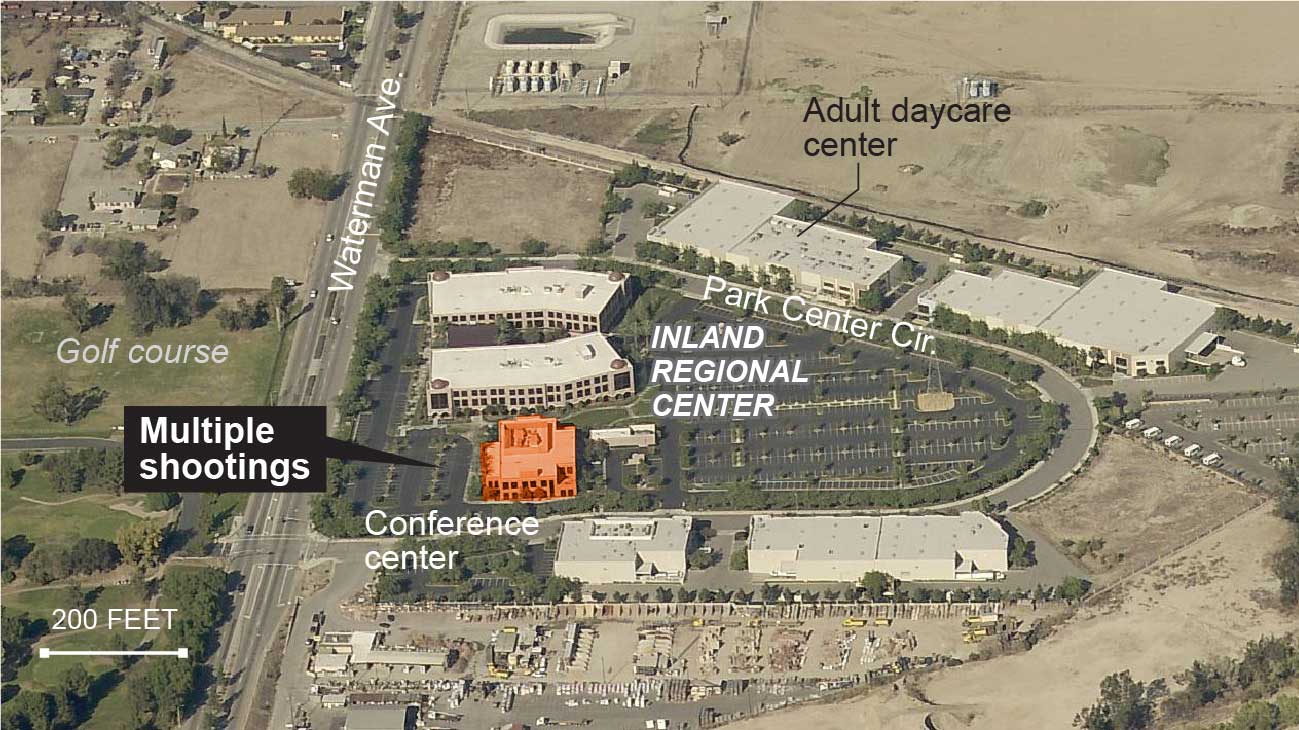
Thoughts About the San Bernardino Shooting
So many things are going through my head today as I digest
the news following Wednesday’s shooting in San Bernardino. Having lived there
for seven years in my first ministry and during seminary, and it being Kathy’s
hometown, you cannot hear about this tragedy without thinking about the past as
well as the present. Thankfully, we’ve had no word of any harm coming to
friends and family there. But fourteen families are grieving today, and the
network of sorrow certainly extends throughout that community.
I’m saddened that before the situation was even resolved
with the shooters dead or captured, some saw fit to moralize on the evil of gun
violence in our society and the need for more gun control. I don’t disagree,
and I’m not opposed to such measures if they are constitutional and can be
shown to be able to accomplish real protections for society. However, every gun
used in this case (as in every shooting rampage of late) turns out to have been
purchased legally, with background checks, in California—which has some of the
strictest gun control laws in the country. And the shooters here (a married
couple) also had pipe bombs in their arsenal (illegal in any situation);
thankfully, the bomb deployed on a remote controlled toy car failed to
detonate. They also wore assault gear, had Go Pro body cameras to record the
carnage.
As details have emerged, this incident looks like an
intentional plan to inflict mass casualties, record it in order to scare
others, and continue until dead. In short, this was a terrorist operation. It
may not have been an ISIS or al Qaeda operation. The husband was a U.S. citizen
who flew to Saudi Arabia to marry his wife and brought her back. His family
says he was a religious Muslim, and it would seem they created their own
personal arsenal to create their own personal jihad. This was not simply “workplace
violence”—you don’t prebuild pipe bombs so you can react if someone insults you
at an office party, and then wear a Go Pro while you shoot up a room at random.
No, this would appear to be what many have feared—a radicalized, independent “cell”
of Muslim radicals. I would probably feel better if we found that they were in
league with a known terrorist group and not just homegrown, independent terrorists.
Another development that caught me off guard was a strong
pushback against politicians and others who urged that people’s thoughts and
prayers should be with those in San Bernardino during the ongoing incident. The
New York Daily News highlighted
tweets from four Republican candidates with the headline, “God Is Not Fixing
This” and saying that these politicians were “cowards” for not doing something
about gun control, and hiding behind “thoughts and prayers.” The Atlantic ran a similar story and talked
about this as “prayer shaming”—I didn’t even know that was a “thing.” But it
is, and it grows out of thinking that those who would call for prayer must be
pro-gun rights and conservative. Further, it shows a commitment to the idea
that praying is really doing nothing, and that God isn’t fixing this, but
politicians and elected officials could.
Such thinking is profoundly wrong on many levels. Not all
who pray are against gun control. When a crisis is ongoing, prayer is a proper
response for those who believe in God. A person in the building contacted her
father and her request was “Pray for us.” She was not arguing against gun
control, she was fearful for her life and asked for the only help that she
could seek—God’s. Can people (including politicians) use prayer as a platitude?
Certainly they can. But it is no more platitudinous than decrying gun violence
and calling for gun control before we even know what is going on.
This thinking also takes God out of the equation as not “fixing”
this. Such an arrogant attitude springs either from disbelief in God or a purposeful
disregard of such concepts as God’s sovereignty, moral responsibility, human
freedom, and the existence and all-encompassing power of sin in a fallen world.
Evil people will do evil because that is their nature, and it is the restraining
grace of God that keeps all of us from being the monsters that we could easily
be. Yet we cannot escape the issue of moral responsibility because in this case
and all others like it, we always ask, “Why did they do this?” We want to
understand what is, to us, incomprehensible. We want to say they were crazy or
on drugs or offended or religious zealots, but we want a reason that we can
judge.
Of course, those who believe in God will not be dissuaded
from believing that prayer is one of the most important actions to take in any
situation, regardless of what else we may be able to do. We also believe that
God rules in the affairs of men, and has already told us that when humanity
chooses not to acknowledge him, he gives them over to their own sinful desires
and imaginations, to passions that will undo them, and to debased minds and
thinking that will justify and celebrate doing what ought never to be done
(read Romans 1:18-32 carefully, and see what it says about the human condition
once the truth about God that is available to all is rejected). Our world
continues to experience the evil that people can and will do as they exercise
their choices out of their own motivations.
Finally, we do believe that God is fixing this world,
but in a way that will bring divine judgment upon all who fail to acknowledge
him and deliverance and blessing for all who receive his grace and forgiveness.
In fact, “…now he commands
all people everywhere to repent, because he has fixed a day on which he will judge the world in
righteousness by a man whom he has appointed; and of this he has given
assurance to all by raising him from the dead (Acts 17:30-31).”
Until
that “fixed” day, we repent, we worship, we pray, we bear witness, and as
representatives of the truth and compassion of Jesus, we do what we can to stem
the tide of evil in our society, whether systemic (such as racism) or
individual (such as a lack of daily food).
And we
wait in hope for that day.
Wednesday, December 2, 2015
"I Finally See the Mountains"
An event 35 years ago reminds me that what's real isn't always visible

One of my favorite stories from my early ministry days happened about one month after I started seminary and my work at First Baptist Church of San Bernardino. It was quite a time for me, having driven cross country in a Buick Opel in August (without air conditioning) to begin both work and seminary in a new place. My mentor, Al Somers, was my senior pastor, and I was living in a small house on our church property, surrounded by the church buildings.
I left every Tuesday through Friday morning at 6:10 am to drive the 55 miles from San Bernardino to Talbot Seminary in La Mirada. It was three freeways and 2 major surface streets and traffic was already getting thick every day as I got off the freeway and headed to school. I often stopped at Dunkin Donuts on the way if I had time, but when traffic was bad, getting there in time for my 7:30 class could be dicey--and it was Intermediate Greek that year, so I didn't want to be late and fall behind.
Like every other day thus far, I arrived on time, went to my first two classes, then to chapel, and then my final class for the day. I finished at 12:30, stopped at Del Taco for lunch (if you don't know what it is, you've missed out and I can't help you), and then headed home. I'd be in my office before 2:00 pm and work until 9 or so, breaking for dinner at some point.
On that day, I was driving home, listening to the radio turned up to be heard over the wind coming in my open windows (remember, I had no a/c) as I drove as fast as traffic would allow to get home and get cool. I wasn't really thinking about the drive until about 40 minutes from home, and then I almost drove off the road!
I don't recognize where I am! There are mountains to my left, my right, and ahead of me. Those ahead were snow-capped! What happened? Did I make wrong turn?
I glanced at the side of the road and saw the freeway sign; I was on Interstate 10 East, where I needed to be. The next exit ahead was one I recognized. But I didn't recognize the scenery!
Slowly it dawned on me that the day had been more than a little breezy, with a condition that natives called "the Santa Ana" winds blowing. The name was a corruption of a phrase for "devil winds," and not a reference to the city of Santa Ana, but what they were were high winds coming over the mountains and blowing toward the ocean. These conditions brought dry air, warm temperatures, and most importantly, blew all the smog and haze in the air westward toward L.A. and the ocean, clearing out all the valleys along the way, including mine.
What I was seeing is what my new home looked like when the air was clear. And it was amazing to see! I lived in the shadow of the mountains!
Now, I knew there were mountains around me. I had driven over them to come into San Bernardino. But as I descended into the valley the bluish/brownish haze filled in, and when you looked around from my porch or from the church or from most of the city, you saw hazy sky, and you didn't see the mountains unless you were really close. In that first month, I hadn't gone anywhere other than church, home, school, and a few homes for dinner that didn't give you any sort of panoramic view. So, while I had known they were there, I simply stopped thinking about them.
Until the air cleared, and I saw them. I think from that moment on, my perspective changed. I lived with mountains and valleys. I treasured the seasons when I could see them clearly (winter and spring were the best). And when I couldn't see them I missed them, and longed to see them again. But now they were a part of my reality.
I think that we all have a tendency to forget about mountain-like realities that we may "know" exist but have been so obscured by the haze and pollution of our lives that we forget about them. What are some of the mountains we may be missing? Oh, how about...
I left every Tuesday through Friday morning at 6:10 am to drive the 55 miles from San Bernardino to Talbot Seminary in La Mirada. It was three freeways and 2 major surface streets and traffic was already getting thick every day as I got off the freeway and headed to school. I often stopped at Dunkin Donuts on the way if I had time, but when traffic was bad, getting there in time for my 7:30 class could be dicey--and it was Intermediate Greek that year, so I didn't want to be late and fall behind.
Like every other day thus far, I arrived on time, went to my first two classes, then to chapel, and then my final class for the day. I finished at 12:30, stopped at Del Taco for lunch (if you don't know what it is, you've missed out and I can't help you), and then headed home. I'd be in my office before 2:00 pm and work until 9 or so, breaking for dinner at some point.
On that day, I was driving home, listening to the radio turned up to be heard over the wind coming in my open windows (remember, I had no a/c) as I drove as fast as traffic would allow to get home and get cool. I wasn't really thinking about the drive until about 40 minutes from home, and then I almost drove off the road!
I don't recognize where I am! There are mountains to my left, my right, and ahead of me. Those ahead were snow-capped! What happened? Did I make wrong turn?
I glanced at the side of the road and saw the freeway sign; I was on Interstate 10 East, where I needed to be. The next exit ahead was one I recognized. But I didn't recognize the scenery!
Slowly it dawned on me that the day had been more than a little breezy, with a condition that natives called "the Santa Ana" winds blowing. The name was a corruption of a phrase for "devil winds," and not a reference to the city of Santa Ana, but what they were were high winds coming over the mountains and blowing toward the ocean. These conditions brought dry air, warm temperatures, and most importantly, blew all the smog and haze in the air westward toward L.A. and the ocean, clearing out all the valleys along the way, including mine.
What I was seeing is what my new home looked like when the air was clear. And it was amazing to see! I lived in the shadow of the mountains!
Now, I knew there were mountains around me. I had driven over them to come into San Bernardino. But as I descended into the valley the bluish/brownish haze filled in, and when you looked around from my porch or from the church or from most of the city, you saw hazy sky, and you didn't see the mountains unless you were really close. In that first month, I hadn't gone anywhere other than church, home, school, and a few homes for dinner that didn't give you any sort of panoramic view. So, while I had known they were there, I simply stopped thinking about them.
Until the air cleared, and I saw them. I think from that moment on, my perspective changed. I lived with mountains and valleys. I treasured the seasons when I could see them clearly (winter and spring were the best). And when I couldn't see them I missed them, and longed to see them again. But now they were a part of my reality.
I think that we all have a tendency to forget about mountain-like realities that we may "know" exist but have been so obscured by the haze and pollution of our lives that we forget about them. What are some of the mountains we may be missing? Oh, how about...
- God's constant presence--"As the mountains surround Jerusalem (or San Bernardino), so the LORD surrounds his people"--Ps. 125:2
- The Lord's willingness to help--always. "I lift up my eyes to the hills. From where does my help come? My help comes from the LORD, who made heaven and earth"--Ps. 121:1-2
- The reality of the spiritual realm of powers arrayed on our behalf, like Elisha's servant was made able to see on the mountain where they were--2 Ki 6:17
- The promise of dwelling in God's presence in a place he calls "my holy mountain"--Is 11:9, 56:7, 57:13, 65:25
So, I'm here to shout to you today, "The mountains are there!" And I'm praying that God sends a strong east wind your way to clear the valley and remind you once again of his realities!
Tuesday, December 1, 2015
Inconsistency in Interpretation of Current Events
OK, I normally try to rein in my thoughts related to current events and politics. While my "conservative" leanings are no secret or surprise, I am not a lock-step "right wing" person, and try to think clearly on issues. Yesterday, as I heard people trying to link the Colorado Springs shooter with "pro-life" arguments against abortion generally and Planned Parenthood specifically, I became frustrated at the false equivalence. Just because one deranged person MAY have decided to do something heinous and would claim to be acting out of a motive to punish PP for its selling of baby parts (we don't really know what his motive is other than one report released by PP claiming a remark was made to that effect) does NOT mean that the argument against abortion or PP incited this man, or is somehow responsible for the violence. And his very anti-prolife actions do not justify ending the argument in any way.
Jim Geraghty writes a daily newsletter, "The Morning Jolt." He commented on this response and the generally unbalanced way such links between violence and a "cause" are drawn today. I was so impressed, I'm republishing it here (the links provided in the content are his, not mine).
The On-Again, Off-Again Arguments about ‘Dangerous Rhetoric’ Leading to Violence
We must not forget that, in a fallen world, evil people (read, "all of us at some level or another") can also be unhinged people, and that combination will always be difficult to understand and their actions to explain.
Jim Geraghty writes a daily newsletter, "The Morning Jolt." He commented on this response and the generally unbalanced way such links between violence and a "cause" are drawn today. I was so impressed, I'm republishing it here (the links provided in the content are his, not mine).
The On-Again, Off-Again Arguments about ‘Dangerous Rhetoric’ Leading to Violence
Let me get this straight. In the eyes of the Left . . .
. . . criticism of Planned Parenthood means something like the shooting in Colorado “was bound to happen“ . . .
. . . but chants where people describe police as “pigs” and call for them to be “fried like bacon” don’t lead to attacks on police . . .
. . . when an event by Pamela Geller is targeted by an Islamist shooter, it is “not really about free speech; it [is] an exercise in bigotry and hatred” and the attempt to kill her means she has “achieved her provocative goal” . . .
. . . while at the same time, investigators contend we may never know what motivated a 24-year-old Muhammad Youssef Abdulazeez to kill four Marines and a sailor in an attack on Chattanooga’s U.S. Naval and Marine Reserve Center last July . .
. . . a shooting by a diagnosed schizophrenic, who believed that grammar was part of a vast, government-directed mind control effort, is characterized by the Southern Poverty law Center as having views that are the “hallmark of the far right and the militia movement” . . .
. . . while the shooter who opened fire in the lobby of the Family Research Council in downtown Washington in 2012, who planned to target the Traditional Values Coalition next, does not spur any need for a broader discussion or societal lessons about the demonization of political opponents . . .
. . . a California killer, who was treated by multiple therapists and already had police checking on him after posting disturbing YouTube videos, is a reflection of “sexist society” . . .
. . . but there’s little reason to ask whether the Oregon shooter’s decision to target Christians reflects a broader, societal hostility to Christians, or whether it reflects his personal allegiance to demons . . .
. . . when white supremacist Dylann Roof commits an act of mass murder in an African-American church, Salon declares, “White America is complicit” and the Washington Post runs a column declaring, “99 percent of southern whites will never go into a church, sit down with people and then massacre them. But that 99 percent is responsible for the one who does” . . .
. . . but the Roanoke shooter’s endless sense of grievance and perceptions of racism and homophobia in all of his coworkers represents him and him alone . . .
Do I have all that right? And does that make sense to anyone?
Wouldn’t Occam’s Razor suggest that those already driven by a desire or compulsion to kill other people are going to do so, and will merely latch on to whatever “reason,” justification, or excuse is at hand or is most convenient? Isn’t it ridiculous to expect sane people to watch what they say and restrict what thoughts they express in order to prevent a rampage by someone with an inherently illogical, literally unreasonable, not-sane thinking process?
Isn’t “don’t say what you think, because it might set off a crazy person” the most insidious form of censorship, because none of us can really know what prompts a crazy person to go on a violent rampage?
Subscribe to:
Posts (Atom)