Tuesday, August 25, 2015

A Congregational Primer

When we speak of a "congregational" church or government for the church, there are a number of ideas that may come to mind that are not healthy. While I would never want to opt for some outside authority, either denominational or hierarchical, to make decisions for local fellowships, we have not always taken time to consider what that should or should not look like.

Some of us have grown up with a “political climate” as our model—this is wrong. Having a congregation of believers prayerfully consider what is to be done and then express their combined wisdom should not involve adversarial politics, because we are all in this together. It may involve animated discussion of the text of Scripture, how interpretations are formed, what the ramifications of interpretations or decisions might be, and so on. But it should never be about winning and losing, but humbly participating. If our path is the one chosen, we are thankful that God gave that wisdom. If our path is not, we are equally thankful that God has guided the church. And we only question a decision that is clearly opposite the teaching of Scripture--and such questioning may require us to move to another fellowship if the matter is of primary importance (the kind of matter that affects salvation, for example).

Some of us have grown up with a complacent attitude—this is also wrong. Many of our younger members aren't really interested in church government, and yet those who lead the church have such a tremendous impact on what we are all taught, how we prioritize for ministry and money spent on ministry, how we staff the church, and so many other important issues. Complacency in congregational churches will lead to both unchecked leadership and a much greater influence on direction by the smaller portion of the congregation that exercises its ability to vote and make choices. If that small group has an agenda, that can also be very dangerous. The church needs its members to care about its direction. It is wonderful when people trust their leaders, but the choice of trustworthy leaders has to be made by the congregation.

So, how should a congregation approach a decision about a change, as we are doing now?

Normally we should hope for unity, and we should accept a strong consensus. And if we believe our leaders are acting in good faith to implement plans and directions according to their understanding of Scripture, they should receive the benefit of the doubt with an attitude of godly submission. It should never be the thought that a "unanimous" vote would somehow be too much like a rubber stamp! I'm afraid that someone (or a few someones) in our church must think that, because in ten year's time, the only matter to ever receive a unanimous approval in a ballot vote has been the acceptance of the annual meeting minutes--and that has not even received a unanimous approval every year. How is it that God might have led someone to vote "No" on a deacon  or a pastor or a missionary candidate that every other member in the church who voted said "YES" to--every time we vote? It makes me wonder if this demonstrates a love for the unity of the church that Paul said was so important in Ephesians 4? I love this church, and even when suggesting things that may not pass unanimously, I want to do all I can to encourage agreement. When someone finds nothing--not a single deacon candidate, a single budget, or a single special action that they can support, I don't think the problem is with congregationalism or with the rest of the church. 

So, is there ever a time when you should vote “No” on a change?  Here are five suggestions…

  1. Vote no if a proposal violates Scripture
  2. Vote no if the status quo is a superior, biblical approach
  3. Vote no if you do not trust the teaching or the motives of the pastor(s)
  4. Vote no if you do not trust the wisdom of the leader that made the recommendation
  5. Vote no if the change will endangers the flock
I would think that most of these should be obvious. I would also hope that any person who held one of these reasons would love the church and its leaders enough to share their concerns or biblically confront them in the cases of 3, 4, and 5. 
What about positive reasons to vote “Yes?” Here are five more suggestions...
  1. Vote yes if you believe the proposal lines up with Scripture
  2. Vote yes if you see biblical and practical rationale for the change
  3. Vote yes if your pastors have shown trustworthiness in decisions
  4. Vote yes if your leaders have a record of showing good judgment
  5. Vote yes if you see potential benefits of the change for the flock
Finally, consider these principles to help a congregation and its members (that would be you) to act and decide issues biblically.
  1. Study the issues in Scripture
  2. Listen to what leadership has to say
  3. Pray (and fast) for wisdom, unity, and blessing
  4. Be willing to follow the congregation’s decision
  5. Submit to your leaders as they implement decisions
  6. Humility for everybody!


Thursday, July 23, 2015

Thriving in Babylon: A Title and a Challenge

Larry Osborne is a pastor from Oceanside, California that I've known since the late 1980s. He has led a solid church ministry in northern San Diego County, but it is his books that have really challenged me, especially the titles. They are such good titles, and they set you up for a great experience reading his books. 

His book on getting people connected in and committed to a body of believers? Sticky Church.

His book on what happens when our "standards" become too important to our Christianity at the expense of grace? Accidental Pharisees.

But his latest may be his best title yet (can't say about the book because I just got it). It is using the life of Daniel to learn about how those who love God can live, serve, and prosper even in a culture that stands for all the wrong things. It calls for "hope, humility, and wisdom." The title is Thriving in BabylonThe book is certainly timely, because of its subject matter. But that title just grabs hold of me, almost making me shout "That's it! That's what we need to do!" I don't know that there ever was truly a "Christian America"--in fact, I'm pretty sure there never was. But there was a time when America and Americans took most of their cues on the nature of life, right and wrong, the value of human life, the definitions of human relationships, and more, from biblical understandings. After all, all men being "created equal" doesn't stem from evolutionary thought, atheism, or rationalism. I know we are not the "morality police," but Christian faith has been the "morality source" for the underpinnings of the nation. It was that niggling "all men are created equal" that was the impetus for the abolition of slavery, the emancipation of women, and a few other good things.

Those days are gone. Forever. Don't assume the next election will change it all back. It won't. We are, as another book title from decades ago put it, Slouching Towards Gomorrah. Christians have always been "strangers and aliens" in this world, but in America, an illusion developed that because our values had shaped the nation's founding in so many ways, we would always have a better culture and an easier way in the world. No more. 

Unlike Daniel and his friends, we have not been carried off into captivity. Instead, we have had the true nature of being exiles made clear as the glossy curtains of America's civic Christianity have been ripped down. It's taken long enough that the coming generation has no real memory of it being different, but historically, the pace of the change has been breathtaking.

So America isn't the promised land. It is Babylon. A powerful nation with dangerous rivals who would eventually overthrow it, Babylon was not a friendly place for Jewish faith to thrive, and to do so as a captive carried off to serve in the palace would be even harder. But Daniel and his friends decided that a hostile environment didn't change the truth from God or the power of God to accomplish the will of God. When they could seek accommodation (in their diet for example), they did. When they could serve (interpreting a dream or serving in administration), they did. And when they couldn't compromise and needed to trust God (as in not worshiping an image on pain of death), they did. And they didn't just survive--they thrived. They made a difference and an impact. And they did so with no guarantees that it would all turn out for them. Even though it did, as Osborne says, they were "exceptions, not examples."

America is a powerful nation with dangerous enemies, and it is not necessarily a place that fosters faith or faithful obedience to God. It seems to have become (or is certainly on its way to becoming) another Babylon--not in the biblical prophecy in Revelation sense, but in its increasing opposition to God and His Word. Yet, many of God's people in Babylon managed to do so much more than just survive. It wasn't just Daniel and his friends. Whole communities of captives in Babylon kept the faith alive. Synagogues were born in Babylon, and biblical scholarship among Jews actually flourished--one of the great copies of their laws was called "the Babylonian Talmud" because it developed there. Many were able to thrive, because they didn't forget God, and they knew he had not forgotten them.

That's what we Christians need to do. We need to decide to thrive. It doesn't matter what the culture may adopt next, or whether we won't be popular or respected or tax exempt! We know our God, and he hasn't forgotten us or lost control of his plan. And because we are still here and the end hasn't come, there is still the opportunity to bear witness to truth and know that our witness and fruitfulness can thrive. So, let's do this. Let's not back off what we believe, but let's stop being surprised that others don't believe it. Let's expect iniquity to abound--these are, after all, the last days. But let's remember that when sin abounds, grace still abounds much more. Let's believe that God may be making the lines between truth and lies clearer, and pushing those who claim to know him to show where they stand. Let's believe that some pressure (and maybe some persecution) is going to be the catalyst for cleansing and empowering God's people. And let's thrive, like the faithful Jews in Babylon, or like the church just after Stephen was killed, or like believers in China for the past sixty years.

(Oh, and maybe you'll want to read the book, too. You can order it here. I haven't finished so I can't offer a full endorsement yet, but I like what I've seen so far.)

Wednesday, July 22, 2015

A summer of shifts and shocks

It's the midpoint of summer, and as often happens, plans for a slower pace have been blown to bits by the onslaught of the summer "specials"--those things that come along where you decide, "Sure, I can do that, it's summer and the normal stuff isn't happening." Except, as you probably know, much of the normal stuff does keep going, and now you have more to do than you thought.

Don't get me wrong; the special stuff makes the summer exciting and, well, "special." We've hosted a few special events at our church that have been a real delight. We've had unexpected guests in our home, spent enjoyable time away, and were blessed with unique opportunities to serve. This weekend, for example, we're hosting 40-50 TCKs (third culture kids) attending a cultural "re-entry seminar for a Nacho Bar!

But it's been a very different summer in a number of key points. The weather has been atrocious. Here in Ohio we had the same terrible winter that lots of the rest of the country had, and because of that you hope for a respite in a beautiful summer. We managed to get one week of that--in Myrtle Beach on vacation. Coming home, we've had mainly clouds, rain, and cool temperatures until this week, when we went directly to hot and humid with thunderstorms. I can count on one hand the number of warm, sunny days we've experienced (OK, maybe the thumb of the other hand would be needed). Our experience is not different than so much of the rest of the country.

There have been a few disappointments this summer for people and relationships. I've seen people who were seemingly getting healthy die, and had people who said they would be around decide to disappear.

But it's also been a summer of unsettling news and change. I won't take time to revisit the Supreme Court decision to require all states to recognize the union of same sex couples as "marriage." In overturning a fundamental definition that has existed from the beginning of history, five justices have just done something that undermines family and society, defies common sense, and finds a "right to marry" that simply does not exist in the Constitution (the basis for any ruling they are making). It would be as if they declared blue to be yellow, along with yellow being yellow, and pity the person of aesthetic soul and conscience, as well as logic and a smidgen of historical sense who says that only yellow is yellow.

ESPN ignored genuine heroics by people who achieved great things, paid incredible prices (and in some cases lost their lives) to achieve success in the realm of sport and have served as examples to inspire others, and chose a former athlete who is now a transgender celebrity whose actions have more of the self-aggrandizing than the self-sacrificing about them to designate as the winner of their "Courage" Award. How does milking your former athletic glory and subsequent celebrity marriage, reality TV show, and coming out on national television count as courage?

Planned Parenthood's medical director was video-recorded having a nice lunch over which she sips her wine and discusses the proper way for an abortionist to crush heads and legs of a fetus to save the liver for sale. It's guided by ultrasound, don't you see? And the reaction of many? How terrible that such "sting" videos make the news--unless it is a video for a cause we like!

Our government officials have negotiated a deal with Iran that ensures their continued ability to enrich uranium and move toward possession of a nuclear weapon, while they lead public chants of "Death to America" and continue to hold four Americans as prisoners for no justifiable reason, including a pastor. If you read Joel Rosenberg's novels and commentary on current events and prophecy (not to mention those scriptures themselves), you can't help but shudder at these developments, just a little bit.

And as we get ready to select a new president next year, one party can't field a single candidate who would say a good word about any abortion limitations (ban on late term procedures, require an ultrasound to be shown to the mother, allow the father a say, parental consent for minors, forbid when pain can be felt, etc.) for any reason [For me, abortion is one of those "beyond debate" issues, and when given the chance I will ALWAYS for a pro-life candidate, having led me to vote for candidates in the past whose other positions were not mine, but whose commitment to protecting life was solid. That's me, and I'm not telling you that you are wrong if you disagree, but do think about it.]. Their front-runner seems unable to give straight answers, tell the truth about past decisions, or hold a position held ten years ago, but the others just can't seem to attract any real attention yet.

And the other party? Well, it is quite a "party" actually, with more candidates than people who attended my last birthday party. I actually can respect a number of them, and they all support protecting life, EXCEPT THE CURRENT FRONT RUNNER! I am mystified that a blowhard billionaire can, by sounding mad as h###, move to the front of the pack when he supported the current president that he blasted seven years ago, gave money to his potential opponent from the other party, and has advocated policies most in his party abhor. He recently said a decorated veteran and senator, who was a POW in Vietnam, was not a war hero just because he got shot down and spent years in a POW camp. The billionaire says he likes guys who didn't get captured. He ought not to be taken any more seriously than his TV show. But I also have to wonder what makes a man (or woman) say, "I am sure I can pull away from 15 others and be the next nominee and president." When does self-confidence slide into self-delusion?

Just for good measure, I'm seeing reports of an expected mini "Ice Age" coming in my lifetime (maybe we can promote more global warming to stave it off), and a 30% chance of an earthquake that will wipe out the Pacific Northwest coast in the next few decades. The economic recovery isn't huge, and financial institutions are very nervous, as Greece's eventual default may rip through the world's banks, if China's massive economic slowdown doesn't shake them first.

So, let me see where I stand.
  • I can't count on my bank account or retirement.
  • I can't count on the environment.
  • I can't count on the ground under my feet.
  • I can't count on political candidates or solutions.
  • I can't count on my governmental leaders.
  • I can't count on the culture.
  • I can't count on the media.
  • I can't count on law or judges.
  • I can't even count on the weather. 
Even I can see that, perhaps, this is a not so gentle reminder from the God of our salvation that there is only One in whom we can trust and never be disappointed. How about you?

Saturday, July 18, 2015

Don't Waste Your Summer!

Time for some educational, apologetic, (and perhaps remedial) reading for such a time as this.


Augustine heard a voice in a garden say this when
sitting next to a Bible. He did, was converted, and
the rest is history. May you have such a powerful
experience as you read good things this summer.

I am a great advocate of reading, and I do so widely--theology and contemporary issues, history, biography, and fiction (classic and new) all interest me. But I also find that at times when there are very pressing issues or concerns for Christians, good reading can be an essential bulwark in building up both my faith and my knowledge so that I might give good answers to anyone who would seek them from me.
There are a number of such issues today, but none seems to have captured our attention like same-sex marriage (SSM) and same-sex attraction (SSA) and how we might respond to it. Let me suggest that the need to find ways to engage those who support SSM and believe that acting on SSA within "loving, committed relationships" is a biblical option is a great one; those who simply say, "well, there are good arguments and scholars on both sides" need to actually engage their brains instead of assuming we can't really know. In order to get yourself equipped for this ongoing conversation, let me suggest some reading that will help (clicking on the title will take you to an Amazon.com link where you can buy it):

What Does the Bible Really Teach About Homosexuality? by Kevin DeYoung. This is a short book, but a powerful one, and if you are only willing to read one book, choose this one. It covers the biblical texts, deals with the most common arguments against them, and then wrestles with the questions raised by many Christians. It is excellent.

Is God Anti-Gay? by Sam Allberry. Sam is an Anglican pastor from England who deals with SSA in his own life, and has written another short book on this subject, and his own life and testimony certainly provide the perspective of one intimately involved and concerned on this issue. I've heard Sam speak, and I have great appreciation for his work.

God and the Gay Christian? A Response to Matthew Vines, by James Hamilton, Denny Burk, and Owen Strachan. Vines, a former Harvard student and former "evangelical" wrote a book that became very popular repeating many of the claims that have been used before him to justify homosexual practice within "committed relationships" and it caused quite a stir. This book goes through those arguments and responds. Since Vine's material wasn't really "new," neither were the responses, but they were needed and they were good.

Out of a Far Country, by Christopher Yuan, is one of the best personal stories of both conversion and commitment to faithfulness to Christ. Yuan's visits to Cedarville University may have made his name familiar to you, but his book should be read if you haven't already.

The Secret Thoughts of an Unlikely Convert, by Rosaria Butterfield. This is the story of a former atheist, lesbian, feminist studies professor who came to a very unexpected encounter with Jesus Christ. Her story is incredibly powerful and informative.

Washed and Waiting: Reflections on Christian Faithfulness and Homosexuality, by Wesley Hill. This testimony of a young man battling against SSA and trying to discover God's will is a powerful one. His commitment to celibacy and the development of spiritual friendship within the Church is commendable.

The Bible and Homosexual Practice: Texts and Hermeneutics, by Robert A. J. Gagnon. OK, for those who still want to argue about the texts, this book is the single most exhaustive study available, and has been strongly endorsed as accurate even by many who oppose Gagnon's conclusions that the Bible is opposed to all homosexual activity. It is big, it is detailed, and as someone once said in another context, "if this doesn't convince you, you may not be open to being convinced at all." This is not light reading, so don't take it to the beach.

There are other books I can also recommend, but these should get you started. Not every statement in every book is endorsed by me, but these authors hold high views of Scripture and demonstrate good understandings that make them all easy to endorse for your consideration.
Summer is always a time that people think about reading (perhaps taking a book on vacation), or may have a little more time to do so. Of course, you can now "read" through audiobooks, so that counts, too.

There are some other recent reads I can commend to you

I've had some vacation time, so I've read a good bit already, and I have a few things from this summer and the more recent past that you might find enjoyable, profitable, and hopefully both.

Encounters with Jesus, by Tim Keller. Keller is one of the best authors of our day, and this book was so encouraging and refreshing--I read it in two days! Keller uses Jesus' interaction with various characters in John's gospel to bring home vital truths for believers in all situations. I highly recommend this book! Keller has lots of other titles that would be worth your while as well.

The Distant Land of My Father, and City of Tranquil Light, by Bo Caldwell. These two books were some of the best novels I have read in the last ten years. They are both set in China, and both have commitment to 20th century history and missions in China. The characters are well developed, and the stories leave you wishing they would continue. Absolutely first rate fiction. I list them in written order, but read them in reverse.

Creature of the Word, by Matt Chandler and others. A very good read encouraging us, as the Church, to be people who are shaped by and submissive to God's Word in every way. If you have listened to Chandler's podcasts, you will hear him in the pages of this book.

I'll not list the latest Patrick O'Brian "Aubrey/Maturin" novel I finished (about halfway through the series), nor the Jeffrey Archer series that sucked Kathy and me in on Audible and now causes us to wait for him to write the next installment. And I'm resisting my urge to tell you to go get a book (any book) by David Platt (Follow Mewas great) or John Piper or Paul Miller (like A Loving Life), or Randy Alcorn if you haven't read his books--fiction or non-fiction.

Sunday, June 7, 2015

When Pastors Go Visiting Churches

One of the more interesting activities for me on vacation is to go to a church I've never been to, and try NOT to be a critic. It is actually quite difficult, I'm ashamed to say, because I've been so involved in strategizing, planning, executing, and then critiquing services for years that my mind's first thoughts are what is going on, what do I think is great, what do I not like, etc. I have to purposely pray (and I did this morning), "God, I am here to worship you with people who love you. Help me stay focused on you and what you have to say to us in the music and the preaching, to your glory."

I went online and surveyed some options. Our church is a member of one particular ministry association, so I looked at its directory and found three options nearby. I checked each one's website, tried to gauge what I could (churches can be great at websites but not so great in person), and settled on an option that looked promising.

So we drove up to a church this morning that had clearly marked directions to its parking lot next to the building they rent on Sundays. A sign said to turn on your flashers if you are a visitor, so I did, and was personally guided to a parking space near the front. As we walked in we were greeted by three or four greeters as we waited for the first service to end and ours to begin. We went in to the gymnasium that had been set up, and to say it felt "different" was an understatement. Very large speakers less than 30 feet from the back row let you feel as well as hear the music--especially the bass resonating in my chest. Black curtains partitioned off the space and the stage well, and as we started, the lights went down, the fog rolled in, and the strobe lights kept pace with the bass, scanning the crowd. We were asked to stand, and put our hands together, and we did. As we were clapping and the solo began, I was thinking that I knew the song, but wasn't sure we'd used it in worship. A few seconds later I was sure we hadn't. It was the music team's dead on rendition of "Shake it Off," only it was someone who sounded just like Taylor Swift, at least to my ear. I wondered to myself, "what is coming next?" Had my research failed me? Was it going to be a lost hour for us?

As it turns out, I was in a very contemporary but gospel-centered Sunday service (aside from that first song, which they used to get people in the room and smiling). As you might guess, this music team was definitely "professional grade"--we are vacationing in a town where there are more professional stage musicians than you could count, which probably means most the churches here could do that. Even though there were less than 200 people in this particular service, the ambient features (lights, sound, fog) were what you would see in much larger churches like this. The pastor was in his contemporary "clerical robes" (untucked dress shirt and jeans--if you hear a bit of jealousy it's only because I'm too old to carry off that look) but neither he nor the worship pastor (white t-shirt, jeans, and white high tops) had a soul patch--which may be "so 2013," I don't know. The church applauds when they take the offering to remind themselves that this is a privilege to show that you serve God and not money. And then the message began--a video from a series two years ago, as the church is doing a "Greatest Hits" theme for three weeks before moving into a new series and a new home. "It's just like summer reruns," I thought, and realizing we've have my last eight years of sermons on video, I'm tucking that idea away in the back of my head.

The text was Matthew 7:1-5, but it was the title and main idea that kind of threw me at first: "How to Hug A Vampire." I try to do catchy titles that help people remember them, but this was beyond my range. It was a creative and, for me, very different way to approach the passage, but it was also very sound in its practical exposition of the main points of the text, and I wrote them down and remember them. Here's my summary:
We didn't get one of these
  1. While we think that others "suck the life out of us," be careful, because we do the same to others--and however we may judge them, others will judge us in that same way and with the same criteria.
  2. We need to stop concentrating on others's faults (a diversion), because we have pretty big ones of our own. "We need to put down the magnifying glass and pick up the mirror." 
  3. The problem? Vampires can't see themselves in a mirror (what a great pick up from vampire lore)! Left to ourselves, we will never see what needs to change about us. This is where we need divine intervention to see what we cannot. And as we come to see we need grace, we become those who extend it to others. Others are a challenge most often because we are so self-centered!
There was more, but that's what I wrote down. There was a final song, and then we left. On our way out, one of those who greeted us on the way in (but had no notes) greeted us by name again as we were headed toward the car, and engaged us in a little more conversation--which was especially impressive to us because remembering visitors' names is important but hard to do!

As you see, I couldn't help but notice lots of differences from what I was used to. We have a regular church auditorium, and while we use different styles and instruments, no one is going to mistake us for "cutting edge" at any level. I'm not one who likes lighting so low I can't see my Bible. The volume was high to the point where other than the musicians, I couldn't hear anyone but me singing, and I could hear me because it was in my own head. I don't need fog and strobe lights to move my heart toward worshiping God. 

BUT, I sang worship songs with people who were clearly singing with gusto (from what I could see).
The message was a call to repentance and God's grace. The way the pastor spoke and instructed it was clear that this church (six years old) was aimed for those who are not "church-born-and-bred" and was reaching them. There membership in the same group as our church means they affirm that same key truths and the same high view of Scripture we do. The congregation was mainly people significantly younger than us. And they've grown to the point where they have multiple services and are moving into a new facility--a hard thing to accomplish in such a relatively short a period of time with a younger congregation. My prayer was answered and I was able to worship my God, and come away challenged.

And what about the stuff I didn't like? Well, to quote Taylor Swift, I just needed to decide to "shake it off!"

Saturday, May 30, 2015

Learning from a Cardinal

While I'm fond of the bird, and don't mind either major sports team by that name, the lesson to which
Cardinal Francis George,
who passed away April 17
I'm referring is from a Cardinal of the Roman Catholic Church. Let me share it with you.

Cardinal Francis George, retired archbishop of Chicago, passed away on April 17. Cardinal George was seen as a theological conservative within the Roman Catholic Church, and was not afraid to engage very publicly on issues from abortion to the gay rights movement. He often expressed concern over what he believed was the eroding of religious liberty in the USA.

Now, I am not an expert on Cardinal George's theology or pronouncements. But before his death he made a statement that has a powerful ring of truth that I find sobering and motivational.

This is what he said:
It is likely that I will die in my bed. My successor will die in prison. His successor will die executed in the public square. His successor will pick up the shards of a ruined society and slowly help rebuild civilization, as the church has done so often in human history."
I'm not sure about his timing--after all, his successor is in place. But he may be right--the time that it has taken for Christians of conviction to go from respected, to ignored, to targeted for their beliefs and practices

I'm not committed to his more positive ending scenario--if the Lord does not set in motion his judgments of the final days, then yes, Christians may be privileged to rebuild culture. But these may well be steps that move our world inexorably toward the day of the Lord, for which we earnestly pray because it will vindicate God's people and bring ultimate glory to the Lord.

But what struck me was the Cardinal's mindset. He saw what is going on, and what Christians (of all stripes) have taught and believed down through the ages, and understands the inevitable conflict that is ahead. And he wasn't encouraging us to believe that the tide will turn quickly.

As a pastor in a small town with lots of Christians around, it might be easy for me (and for all of us) to dismiss such thoughts, especially from a source that represents a very different take on our faith. But I just read the comments of an unidentified pastor from Niger, whose church was burned just a few months ago and who was leading his people in worship in the rubble just days later. His comment on this: "We knew this was in the Bible."

Do we know it, too?

Friday, May 29, 2015

Prodigal Son, Prodigal God: Thoughts from a Conference and Two Good Books

This past week I have had the privilege of being at the Billy Graham Training Center at the Cove, in Asheville, NC. I'm actually writing this from the deck of the training center, looking at the clouds on the mountains (tall thingys where the ground has gone up for those of you who never leave Ohio). I'm here to attend a conference by a favorite writer of mine, Ken Boa, who has now become a favorite teacher--the man is a walking encyclopedia of knowledge and wisdom on theology, church history, science (he was trained in astrophysics), and spiritual growth. His books have been part of my devotional life for years.

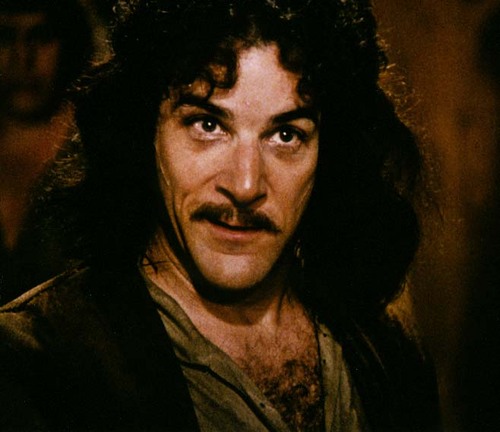
"You keep using that word. I do not
think it means what you think it
means."--Inigo Montoya, 

The Princess Bride

In one of his sessions Ken worked through the story of the lost son in Luke 15. It's the story we call "the prodigal son." I don't know about you, but for years I assumed the word "prodigal" referred to the fact that he rebelled and went away from home. That is not at all what the word means (Inigo Montoya's words are floating through my head right now).

The word "prodigal" does not refer to rebellion, but to lavish generosity. It means to spend freely. The definition is "to spend money or resources freely and recklessly; wastefully extravagant; having or giving something on a lavish scale." 


The prodigal son was "prodigal" in that he spent freely all the wealth that he was given, until it was all gone. His spending was, as his older brother later characterized it, a waste, but while it was going, he was probably the best friend his fellow-partiers could have hoped for. After he spent all, he found himself in dire straits, friendless, starving, and jealous of pigs' food.


And then, he came to his senses. As one of the writers Boa quoted said, he left "the insanity of sin." Boa went on to say that sin really is insanity. We always regret it, always rue our fall, and then we do it again!  But once the son came to his senses, he realized his foolishness, and decided right then to go to the father. And that is what we must do, whenever our insanity is overcome by the Spirit--we repent, and we go to the Father! We may not know what the Father's response and plan will be, but we know his heart, and we know his ways, and so we go.


But there is another "prodigal" in the story... another one who spends lavishly. It is the father, who lavished undeserved riches on an unworthy and ungrateful son. And when that son was repentant, he lavished him with even more that he didn't deserve. And when his oldest son was indignant, he generously invited him to reconsider and enter into the joy of the household. 


Of course, the father is the representative of God, our Father, whose gracious goodness to us is even greater. Henri Nouwen, in his book The Return of the Prodigal Son, suggests that we should also see that all three characters can represent us--the older son being our self-righteousness, the younger our sinful selfishness, and the father our transformed character becoming like God. Tim Keller's book, The Prodigal God, rightly makes the father the central figure of the story because of his dealings with his sons. 


For me, after this week, two truths from this story take on new meaning.


First, I am still subject to bouts of temporary insanity. I never am happy that I sin. I hate that I do. And yet sometime today, I will choose something--some indulgence, some self-promotion, some self-centeredness that is sinful, stupid, and insane!


And second, because I am united by faith with Jesus Christ, the Spirit will wake me up--and I'll have that, "what am I doing?" moment. At that very moment, I need to remember who my Father is and what he has done for me in Christ, repent, and go to him--where I know I will find the forgiveness and grace I need, and the welcome I will never deserve. Because he is a prodigal Father!


Oh, and a third smaller point--I should always ask what words mean!


The bad news for you is that you are just as insane when it comes to sin as I am. The good news? The Spirit can cure you, too, and your Father is really generous--he is positively prodigal when it comes to grace!