Wednesday, November 14, 2012
David Platt's Convicting Call
The preacher whose sermons have convicted me EVERY TIME I have heard him over the last few years is David Platt--whose impact through his book, Radical, continues to be felt in many lives. Here is the message he preached at Liberty University's Convocation in 2011.


Monday, November 12, 2012
The Re-election of President Obama and the Future of America.
In my reading of people I respect and conversations with many around me about the election results, I have noted a larger level of disappointment and despair than I've seen in previous elections where a candidate favored by most evangelicals has lost.
Was the election a demonstration that we are no longer the nation of our founders or of the generation that won World War 2? Cal Thomas thinks that is the case, and says so quite clearly here. Maybe he is right.
One pastor writes passionately that to vote for President Obama was a wicked act because of his stated desires to continue all forms of abortion and make same sex marriage legal. Further, he argues that America is not just wicked, but has been made collectively stupid because of our societal sins. I found his powerful statement here. Maybe he is right.
Of course, there are Christians, especially among the young, women and minorities if the polls are to be believed, who felt that the President's positions on abortion, same sex marriage, and limits to religious freedom were not reasons to vote against him, and that his four years in office provided enough reason to re-elect him. Jim Wallis did not endorse the President in this post on religious consistency and hypocrisy in politics, but he gives the framework for those who might have done so by raising numerous issues the Bible addresses (poverty, care for children who are dying around the world due to what are curable diseases, and care for the strangers among us who are undocumented immigrants) in addition to those I've mentioned and saying we must weigh the importance of each and vote accordingly.
I disagree with Mr. Wallis in terms of what seems to be the moral equivalence he strikes. The deaths of 20,000 children around the world daily due to preventable causes is a genuine tragedy. However, they are not all within the reach (or responsibility) of the American government, and the church is free to act and leads the way in caring for such children to prevent the deaths of many more. Only the government of our country can prevent the legal murder of unborn infants here. Therefore, as a moral decision, the abortion issue is more important when it comes to choosing government leaders.
But, I am not here to rehash the arguments of the election. I understand the disappointment of those who supported Mr. Romney and cannot believe that our country would, after watching the record of the last four years, re-elect the President Obama for another four years. I congratulate those whose votes for President Obama overwhelmed all the supposed momentum for his opponent, even though I cannot actually rejoice in your victory.
What I want to say is this: America's future, while unknown to me in its specifics, will be the same as all the kingdoms of this world. It will ultimately fall, either before the Lord's return or at that time. The nation will be judged, as all nations will be, for its rejection of God's rule and God's ruler--Jesus Christ. And it will not only be overthrown, it will be replaced by the Kingdom of our Lord and of His Christ. Like many nations before us, we have been blessed by God in ways other nations of the same era have not. And like those blessed nations who have gone before us, from the Babylonians with a humbled, repentant Nebuchadnezzar (Daniel 4), to Persia with its God-appointed King Cyrus (see Isaiah 45), all the way to spiritually awakened Britain in the 18th and 19th centuries, we will forget God's goodness, love our sin and ourselves, and bring decline as well as wrath upon ourselves instead of mercy. That isn't very encouraging to patriotic Americans, is it?
God makes clear that there is one remedy that a nation can find that turns away his wrath, and it isn't conservatism, or progressivism, or libertarianism, or any other political -ism. It is repentance. Repentance can come quickly, and it can work powerfully to change matters. However, it is a spiritual blessing that is sought by God's people for themselves and their nation. Many Christians I know are ready to confess the sins of others, but we must confess our own as well, including placing our trust in men, in nations, and in politics.
Let me close with the reminder I shared with the staff the day after the election from 1 Timothy 2:1-4. Paul tells Christians that our first obligation in corporate prayer is for all people, and then he specifically tells us who rises to the top of that large category--kings (or presidents in our case) and all in high positions. Do we offer supplications, prayers, intercessions, and thanksgiving for our leaders? We should, and when we do it allows us to rest in God's sovereignty and experience "a peaceful and quiet life" and to live in a "godly" way--which means living in the realization that God is always present and active. We also live "dignified" lives this way--a life that is worthy of looking at with respect. Exemplary lives are part of God's strategy to see people "saved and to come to the knowledge of the truth." Could fervent prayer for our leaders and repentance within the church be the key turning away wrath and an outpouring of mercy?
Perhaps a great disappointment is necessary to make many of us look at what really matters to us, and whether the troubled state of our nation or the lack of a powerful corporate Christian testimony to those who are perishing is the greater disaster.
Was the election a demonstration that we are no longer the nation of our founders or of the generation that won World War 2? Cal Thomas thinks that is the case, and says so quite clearly here. Maybe he is right.
One pastor writes passionately that to vote for President Obama was a wicked act because of his stated desires to continue all forms of abortion and make same sex marriage legal. Further, he argues that America is not just wicked, but has been made collectively stupid because of our societal sins. I found his powerful statement here. Maybe he is right.
Of course, there are Christians, especially among the young, women and minorities if the polls are to be believed, who felt that the President's positions on abortion, same sex marriage, and limits to religious freedom were not reasons to vote against him, and that his four years in office provided enough reason to re-elect him. Jim Wallis did not endorse the President in this post on religious consistency and hypocrisy in politics, but he gives the framework for those who might have done so by raising numerous issues the Bible addresses (poverty, care for children who are dying around the world due to what are curable diseases, and care for the strangers among us who are undocumented immigrants) in addition to those I've mentioned and saying we must weigh the importance of each and vote accordingly.
I disagree with Mr. Wallis in terms of what seems to be the moral equivalence he strikes. The deaths of 20,000 children around the world daily due to preventable causes is a genuine tragedy. However, they are not all within the reach (or responsibility) of the American government, and the church is free to act and leads the way in caring for such children to prevent the deaths of many more. Only the government of our country can prevent the legal murder of unborn infants here. Therefore, as a moral decision, the abortion issue is more important when it comes to choosing government leaders.
But, I am not here to rehash the arguments of the election. I understand the disappointment of those who supported Mr. Romney and cannot believe that our country would, after watching the record of the last four years, re-elect the President Obama for another four years. I congratulate those whose votes for President Obama overwhelmed all the supposed momentum for his opponent, even though I cannot actually rejoice in your victory.
What I want to say is this: America's future, while unknown to me in its specifics, will be the same as all the kingdoms of this world. It will ultimately fall, either before the Lord's return or at that time. The nation will be judged, as all nations will be, for its rejection of God's rule and God's ruler--Jesus Christ. And it will not only be overthrown, it will be replaced by the Kingdom of our Lord and of His Christ. Like many nations before us, we have been blessed by God in ways other nations of the same era have not. And like those blessed nations who have gone before us, from the Babylonians with a humbled, repentant Nebuchadnezzar (Daniel 4), to Persia with its God-appointed King Cyrus (see Isaiah 45), all the way to spiritually awakened Britain in the 18th and 19th centuries, we will forget God's goodness, love our sin and ourselves, and bring decline as well as wrath upon ourselves instead of mercy. That isn't very encouraging to patriotic Americans, is it?
God makes clear that there is one remedy that a nation can find that turns away his wrath, and it isn't conservatism, or progressivism, or libertarianism, or any other political -ism. It is repentance. Repentance can come quickly, and it can work powerfully to change matters. However, it is a spiritual blessing that is sought by God's people for themselves and their nation. Many Christians I know are ready to confess the sins of others, but we must confess our own as well, including placing our trust in men, in nations, and in politics.
Let me close with the reminder I shared with the staff the day after the election from 1 Timothy 2:1-4. Paul tells Christians that our first obligation in corporate prayer is for all people, and then he specifically tells us who rises to the top of that large category--kings (or presidents in our case) and all in high positions. Do we offer supplications, prayers, intercessions, and thanksgiving for our leaders? We should, and when we do it allows us to rest in God's sovereignty and experience "a peaceful and quiet life" and to live in a "godly" way--which means living in the realization that God is always present and active. We also live "dignified" lives this way--a life that is worthy of looking at with respect. Exemplary lives are part of God's strategy to see people "saved and to come to the knowledge of the truth." Could fervent prayer for our leaders and repentance within the church be the key turning away wrath and an outpouring of mercy?
Perhaps a great disappointment is necessary to make many of us look at what really matters to us, and whether the troubled state of our nation or the lack of a powerful corporate Christian testimony to those who are perishing is the greater disaster.
Friday, November 9, 2012
Never the Same
For your encouragement, I share my friend Steve Richardson's video of the story of his family's ministry and its results. Kathy and I had the privilege of meeting Steve's parents (featured in the video) and are so thankful for the continued faithfulness of Steve and Arlene as they lead Pioneers. Watch and be blessed!
Never the Same from Pioneers-USA on Vimeo.
Never the Same from Pioneers-USA on Vimeo.
Thursday, November 1, 2012
My thoughts on voting, and David Jeremiah's sermon on the election.
It's election time, and as someone who has always had an interest in politics, a passion for truth and justice, and a concern for my own nation's well being, I take voting seriously. I also value God's kingdom over the kingdoms of this world, and my calling as a son of God and pastor in the Church over being a citizen of the USA. I know how easily political passions are stirred, and how we can blur the line between political desires and biblical priorities. What to do?
First, we bow before God's sovereign will, knowing that He will guide events according to his plan for the ages and while we must exercise our responsibilities and will be held accountable for our free actions, He is bringing all of history to its God-glorifying, justice-rendering, mercy- and grace-filled, conclusion. And we are to preach the Gospel of Jesus to the ends of the earth to hasten that day!
Second, we acknowledge that Christ is King over His kingdom, and while it is not here in its fullness, we who are its citizens are to live as such and demonstrate the difference it makes in our choices and in where our confidence lies.
Third, we recognize that in a fallen world, we must often choose the lesser of two evils. No one we could respect would argue that one candidate in our national election for president is God's man, while the other is the forerunner of the Antichrist! They are both flawed men who hold positions and beliefs that do not reflect righteousness fully. But we must still choose and should choose the lesser of the two evils (also known as the better of two alternatives). I read a great post on that subject here. The best reminder there: "Not only are the choices imperfect, but so also is the chooser."
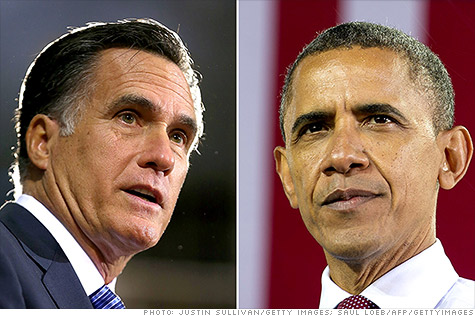
Fourth, we should vote for the candidate that best reflects our understanding of biblical values. I've said my peace about my prioritizing of those values in an earlier post.
David Jeremiah is one of the more well-known evangelical pastors of our day, serving Shadow Mountain Church in El Cajon (outside of San Diego), CA. Before that he was the founding pastor of Blackhawk Ministries in Ft. Wayne, Indiana. And long before that, he was a charter member of Grace Baptist Church in his youth and during his time as a student at Cedarville College, where his father was the first Baptist president of the school.
We have a long connection with and respect for Dr. Jeremiah, and I was recently made aware of a sermon he preached on the upcoming election. A link was sent to me, and as I watched the video, I was impressed at his attempt to frame the choice that Christians face in light of our answering some basic questions about the actions and views of both candidates. He makes no "endorsement," but draws clear lines when it comes to issues such as demonstrating reverence for God, protection of life and liberty, and promotion of biblical family concerns and values. I post the video so that you can watch and decide what you think about it. Disclaimer: the video is from the AFA site, and I do not endorse all actions taken by the AFA, so do not assume otherwise.
And if you have been wondering how Dr. Billy Graham decided to urge Americans to vote for "biblical values" related to protection of the biblical view of marriage, the sanctity of human life in the womb, and protection of religious liberty and conscience, you will find out in the video.
One more thing: before raising the other issues related to biblical justice that are not addressed in this sermon and saying they are just as important, see my previous blog post here.
David Jeremiah on Vimeo.
Wednesday, October 31, 2012
Reformation Day Resources on John Calvin
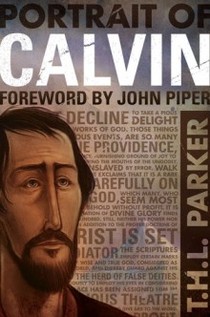
First, there is a short, free biography by T.H.L. Parker, the best known modern biographer of Calvin, that is available from Desiring God Ministries here. They also have a few other resources you can find at their site, some of which I used in my preparation for my message. My major source from this ministry was John Calvin and His Passion for the Majesty of God, and it is found here.

Another biography by a respected modern scholar is John Calvin, Pilgrim and Pastor, by Robert Godfrey. One of our Grace CU students told me about a book by his high school instructor that tells the story of Calvin well in the form of historical fiction. It's called The Betrayal: A Novel on John Calvin, and it is by Douglas Bond. I've looked at reviews and plan to read it myself, but thought I would pass it along for others to review as well (Thanks, Christian Hayes!).
For those who missed the sermon, check the Grace website and soon you should find notes and video (audio should be up shortly as well--we're still working on restoring our iTunes podcast feed).
Have a Happy Reformation Day!
Wednesday, October 17, 2012
The Gospel and Self-Deception
I read Matt Chandler's book, The Explicit Gospel, and now am using it in a Bible study. This quote really stood out to me. Read it soberly!
"Even works of righteousness, if not done through faith, are works of self-righteousness and therefor filthy rags. Be very careful about going to church, reading your Bible, saying prayers, doing good deeds, and reading books like this through anything but faith in the living Lord. Because the result of all that is belief in a phony Jesus and inoculation to the gospel. You can end up knowing the jargon and playing pretend. Be very careful. Watch your life and your doctrine closely (1 Tim. 4:16). Some of you are so good that you've deceived yourselves. God help you" (page 85, emphasis mine).
Friday, October 5, 2012
Some Pro-Life Issues are More Important than Others
As another election cycle concludes, I find myself wondering about the wisdom of some of my Christian friends who try to defend their support for a candidate for office who supports abortion rights by an appeal to other issues. They say something like this,
"Well, there are lots of "pro-life" issues. You can't just care about people before they are born. If you don't care for them afterward--the poor, the sick, the oppressed, the immigrant, the victims of discrimination, etc., you are not really pro-life, you are just anti-abortion."
(Often, the speaker will throw in protection of the environment as being "creation care," and equally or nearly equally important as a "pro-life" issue.)
I believe that every one of the issues mentioned in the above is important, and Christian ethics has something powerful to bring to any discussion of policy decisions. In fact, unlike some of my more rock-ribbed conservative friends, I am supportive of a number of government initiatives and using tax money to address quite a number of programs to address many of them. I am all for a very liberal immigration policy. I've lived in poor neighborhoods, and ministered in places where "the system" really IS stacked against the poor and needy. They do suffer, and it is wrong. However, only one of the issues under discussion is the active, government-sanctioned (and soon to be paid for) taking of millions of innocent, defenseless, human lives.
This kind of weak thinking needs to be seen for what it is--rationalization and false equivalence. It is rationalization because it tries to re-frame issues in a way that says they belong to the same category of moral importance when they do not. The killing of an unborn child is a crime against the God who gives life and a direct violation of scriptural absolutes from Genesis onward against the unjust shedding of blood. This crime, by man or beast, was so evil that God demanded that the offender be executed by "man"--that is, mankind collectively, which we now see function through human government. It is false equivalence in the same way as we see it when people say, "All sins are equally sin, so they are equally bad." Telling a white lie and murder are, indeed, both sins, but the scope, consequences, extent of guilt, etc., are radically different as everyone with a smidgen of common sense (not to mention good theology) understands.
[Let me hasten to add that abortion is, certainly and thankfully, as forgivable as any sin, and those who may have had an abortion under the misguided idea that this was simply exercising a personal choice are in many ways victims as much as sinners. The church is filled with sinners saved by the forgiving grace and mercy of God. My earlier post below addresses my pastoral concern for those who have abortion as a part of their past, and my desire we not let that past define the present or destroy the future.]
Someone who opposes the death penalty as evil, but supports abortion as a personal choice has chosen to oppose something with at least some biblical support (I know Christians are on both sides of that debate) and to support something that violates every principle of Scripture when it comes to the sanctity of human life as given by God. And pacifists who hate war but allow abortion are at least as inconsistent--not wanting to kill in war, even if the aggressor may be heinously evil, but callously allowing the destruction of an unborn child because its arrival might be inconvenient.
If a candidate promises to feed all the poor, but will allow the rich and poor alike to kill unborn babies, that is not in any consistent way a pro-life position. If another candidate will make the killing of babies universally illegal, and says, "let private compassion replace government programs," that may or may not be a good political position, but it is not evil unless it says, "let the poor starve to death; the sooner the better." Debates over the role of government in caring for individuals can take many forms, with both sides able to marshal positive biblical examples and texts for support, but the decision to allow the killing of unborn children can find no such support.
I understand the appeal of candidates who exude compassion and attack greed and selfishness. It resonates when we see inequality, suffering, and evil in our society. But to my friends who want me to join them in supporting candidates who take what they (and maybe even I) would say are more "Christian" approaches to societal evils, I say this: start choosing candidates who will defend defenseless unborn babies, and then I will know that those candidates may be trustworthy in the other issues we face. Until they see that a government cannot practice any form of state supported mass murder, they cannot get me to choose to vote for a candidate who will take the morally right stand on the issue.
By the way, I will vote this way, even if it means voting for a high tax, soft on defense, socialist. My conviction has led me in the past to vote for a liberal Democrat over a conservative Republican.
Now I know that some will say, "You can't legislate morality!" To which I answer, "Of course you can!" That is what legislation does every time it makes something a crime; it creates civil morality. Laws against rape, murder, theft, etc. are the legislation of morality--they are wrong and they will be punished. The question is whose morality will be enshrined in legislation. And as long as I can, I will strive to have civil morality that is as closely aligned with biblical morality as is possible in our society. I'm not after a theocracy any more than our Founders, who seemed pretty comfortable with the idea that the Bible provided a framework from which a republic could draw effective and sufficient moral guidelines.
Think clearly, and think biblically, as you prepare to vote, this time and always.
"Well, there are lots of "pro-life" issues. You can't just care about people before they are born. If you don't care for them afterward--the poor, the sick, the oppressed, the immigrant, the victims of discrimination, etc., you are not really pro-life, you are just anti-abortion."
(Often, the speaker will throw in protection of the environment as being "creation care," and equally or nearly equally important as a "pro-life" issue.)
I believe that every one of the issues mentioned in the above is important, and Christian ethics has something powerful to bring to any discussion of policy decisions. In fact, unlike some of my more rock-ribbed conservative friends, I am supportive of a number of government initiatives and using tax money to address quite a number of programs to address many of them. I am all for a very liberal immigration policy. I've lived in poor neighborhoods, and ministered in places where "the system" really IS stacked against the poor and needy. They do suffer, and it is wrong. However, only one of the issues under discussion is the active, government-sanctioned (and soon to be paid for) taking of millions of innocent, defenseless, human lives.
This kind of weak thinking needs to be seen for what it is--rationalization and false equivalence. It is rationalization because it tries to re-frame issues in a way that says they belong to the same category of moral importance when they do not. The killing of an unborn child is a crime against the God who gives life and a direct violation of scriptural absolutes from Genesis onward against the unjust shedding of blood. This crime, by man or beast, was so evil that God demanded that the offender be executed by "man"--that is, mankind collectively, which we now see function through human government. It is false equivalence in the same way as we see it when people say, "All sins are equally sin, so they are equally bad." Telling a white lie and murder are, indeed, both sins, but the scope, consequences, extent of guilt, etc., are radically different as everyone with a smidgen of common sense (not to mention good theology) understands.
[Let me hasten to add that abortion is, certainly and thankfully, as forgivable as any sin, and those who may have had an abortion under the misguided idea that this was simply exercising a personal choice are in many ways victims as much as sinners. The church is filled with sinners saved by the forgiving grace and mercy of God. My earlier post below addresses my pastoral concern for those who have abortion as a part of their past, and my desire we not let that past define the present or destroy the future.]
Someone who opposes the death penalty as evil, but supports abortion as a personal choice has chosen to oppose something with at least some biblical support (I know Christians are on both sides of that debate) and to support something that violates every principle of Scripture when it comes to the sanctity of human life as given by God. And pacifists who hate war but allow abortion are at least as inconsistent--not wanting to kill in war, even if the aggressor may be heinously evil, but callously allowing the destruction of an unborn child because its arrival might be inconvenient.
If a candidate promises to feed all the poor, but will allow the rich and poor alike to kill unborn babies, that is not in any consistent way a pro-life position. If another candidate will make the killing of babies universally illegal, and says, "let private compassion replace government programs," that may or may not be a good political position, but it is not evil unless it says, "let the poor starve to death; the sooner the better." Debates over the role of government in caring for individuals can take many forms, with both sides able to marshal positive biblical examples and texts for support, but the decision to allow the killing of unborn children can find no such support.
I understand the appeal of candidates who exude compassion and attack greed and selfishness. It resonates when we see inequality, suffering, and evil in our society. But to my friends who want me to join them in supporting candidates who take what they (and maybe even I) would say are more "Christian" approaches to societal evils, I say this: start choosing candidates who will defend defenseless unborn babies, and then I will know that those candidates may be trustworthy in the other issues we face. Until they see that a government cannot practice any form of state supported mass murder, they cannot get me to choose to vote for a candidate who will take the morally right stand on the issue.
By the way, I will vote this way, even if it means voting for a high tax, soft on defense, socialist. My conviction has led me in the past to vote for a liberal Democrat over a conservative Republican.
Now I know that some will say, "You can't legislate morality!" To which I answer, "Of course you can!" That is what legislation does every time it makes something a crime; it creates civil morality. Laws against rape, murder, theft, etc. are the legislation of morality--they are wrong and they will be punished. The question is whose morality will be enshrined in legislation. And as long as I can, I will strive to have civil morality that is as closely aligned with biblical morality as is possible in our society. I'm not after a theocracy any more than our Founders, who seemed pretty comfortable with the idea that the Bible provided a framework from which a republic could draw effective and sufficient moral guidelines.
Think clearly, and think biblically, as you prepare to vote, this time and always.
Subscribe to:
Posts (Atom)